How to Identify Your Mercedes Chassis Code from the VIN

Researched by Craig Sandeman
Mercedes-Benz parts specialist, drawing on 12 years sourcing yard-stripped engines, gearboxes and panels for South African workshops.
If you've ever tried to buy a part for your Mercedes-Benz online, you've probably been asked for your chassis code - a three- or four-character designation like W204, W212 or W463. The chassis code identifies the platform your car was built on, which dictates fitment for almost every part on the vehicle.
The good news: every Mercedes built since the late 1980s carries this information in two places - the VIN sticker and the manufacturer's chassis plate. Here's how to find both.
Where the VIN lives
The 17-character VIN (Vehicle Identification Number) is stamped or printed in three locations on every modern Mercedes:
- The bottom-left corner of the windscreen, viewed from outside
- The driver-side door jamb sticker (open the driver's door)
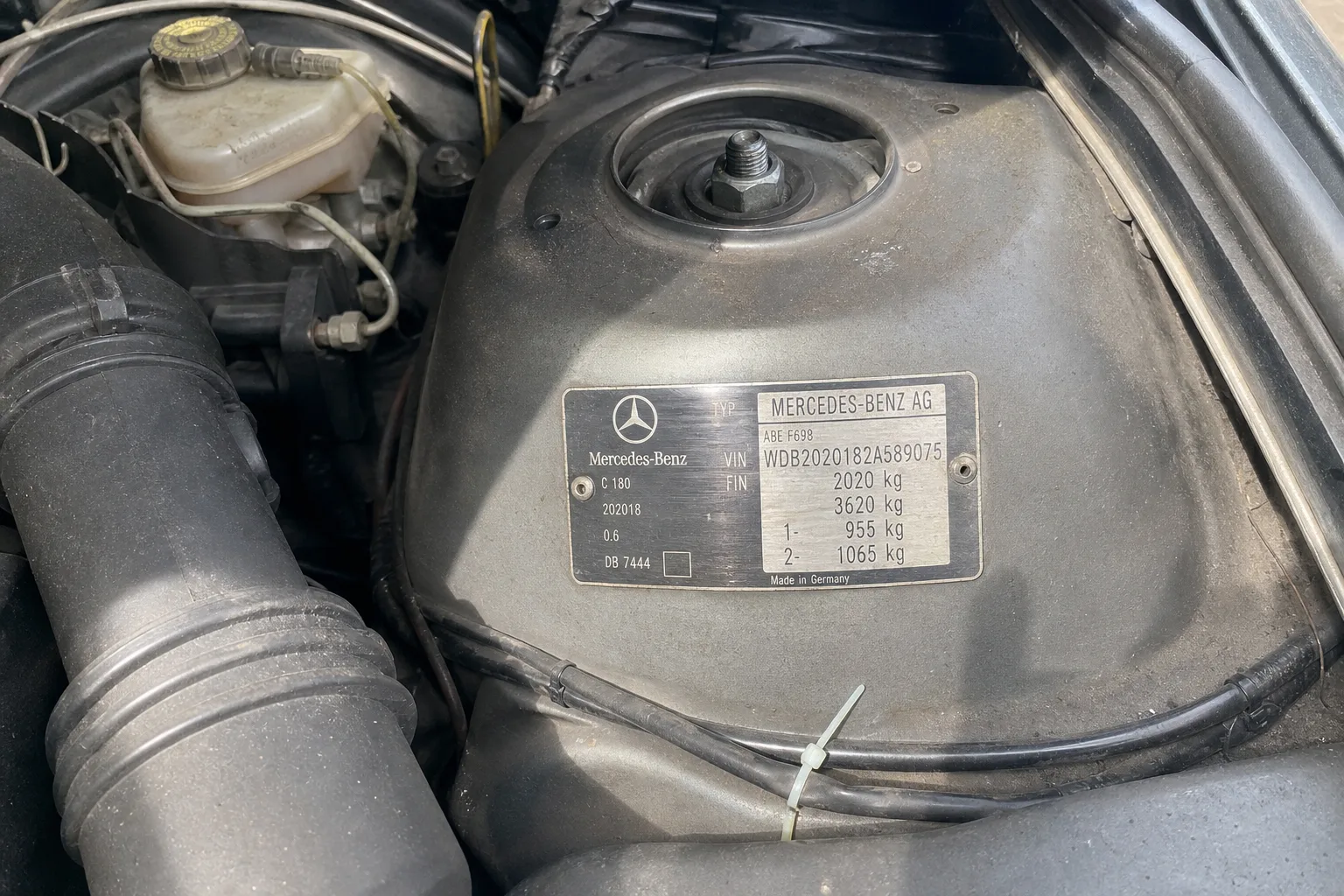
- The Mercedes-Benz manufacturer plate riveted to the strut tower or firewall in the engine bay
If your windscreen has been replaced, or your door sticker has faded from sun, the chassis plate in the engine bay is the authoritative source. It looks like a brushed-aluminium tag with the three-pointed star, the words MERCEDES-BENZ AG, and a row of fields including TYP, VIN/FIN, and weight ratings.
Decoding the VIN
A Mercedes VIN follows ISO 3779. The first three characters are the World Manufacturer Identifier - for cars built in Germany you'll see WDB, WDD, WDC or WDF. South African and Indian assembly plants use different prefixes.
The most useful part for identifying your chassis is positions 4-6, which encode the model series. For example:
WDD204-> W204 C-Class (2007-2014)WDD212-> W212 E-Class (2009-2016)WDD463-> W463 G-Class
If you're unsure, our chassis finder on the homepage will translate the model series for you - just pick your car from the dropdown and we'll route you to the right parts hub.
What if the chassis plate is missing or unreadable?
It happens - particularly on older yard-finds and accident-damaged cars. If the engine-bay plate has been removed, the VIN is still legible at the windscreen and door jamb in 99% of cases. As a last resort, the VIN is also stamped into the body shell under the carpet on the passenger side.
If you genuinely can't find any of those, take a few clear photos of the engine bay and dashboard and message us on WhatsApp - we can usually identify the chassis from a few visual cues like the dashboard layout, gear selector style, and engine cover design.
Why fitment matters more than you think
Mercedes runs generation overlaps on most platforms - the W204 C-Class shares some parts with the W212 E-Class, but not all. Within the W204 itself, a 2009 facelift differs from a 2007 pre-facelift in headlight bracketry, bumper covers, taillight wiring, and interior trim.
Buying a "W204 headlight" off a marketplace without specifying your build year is the single most common reason customers end up with a part that almost fits - close enough to bolt up, but with a connector mismatch or a 5 mm offset that breaks the bumper line. We confirm fitment against your VIN before quoting any part, every time.
What to do next
Use the chassis finder at the top of the page to pick your car, or tap Get a Quote and tell us what you need. Include your VIN if you have it - we'll cross-check against the parts you're ordering before you pay.
Related guides
What to Check Before Buying a Used 7G-Tronic Gearbox
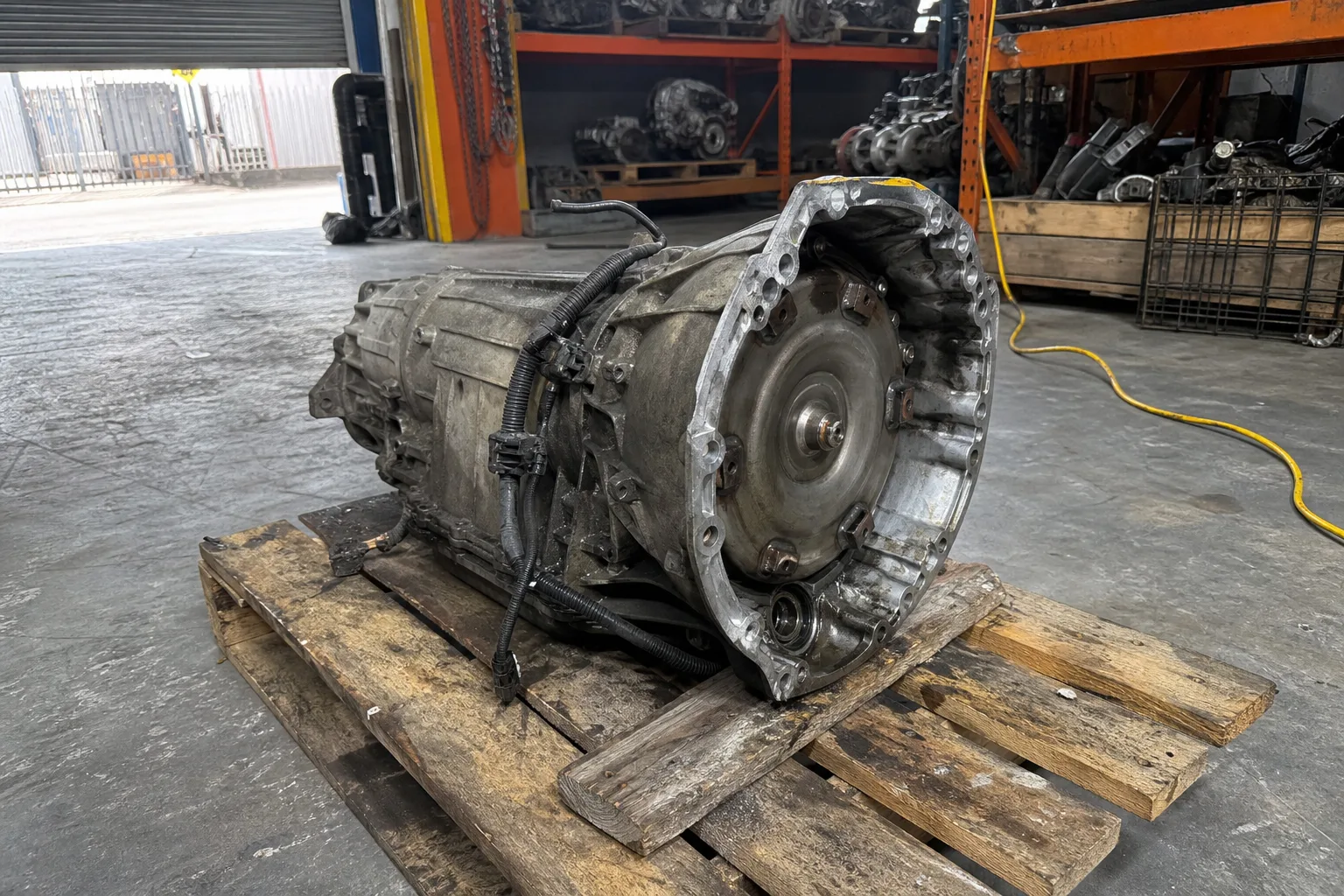
The 722.9 7G-Tronic is a great gearbox - but a worn one is an expensive mistake. Here's the 7-point checklist our workshop runs through before any 7G-Tronic leaves our yard.
Read article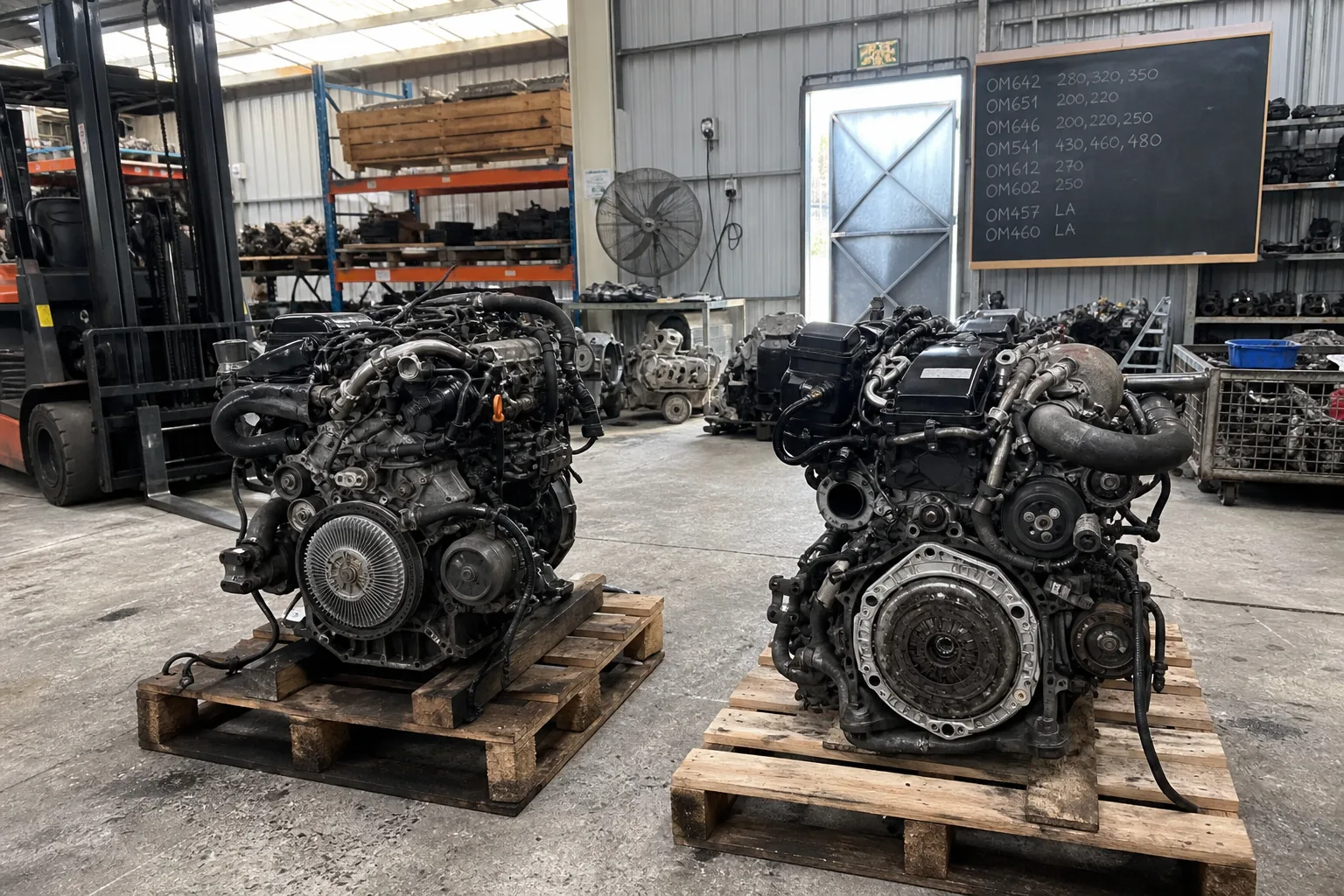
OM642 vs OM651: Which V6/I4 Mercedes Diesel Is in Your Car?
Two of the most common modern Mercedes diesels âEUR" but they share almost no parts. Here's how to tell them apart, what each is fitted to, and what to watch for before buying parts.
Read article